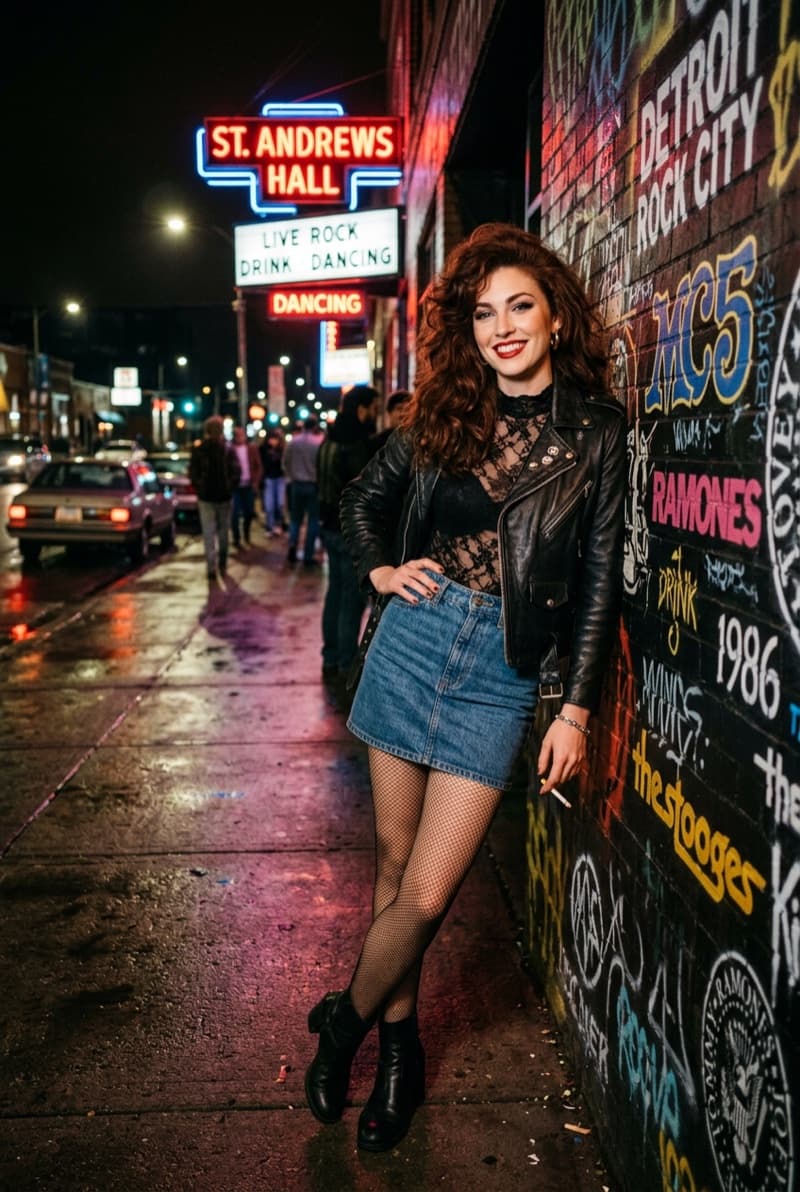
Lead Vocals
Roxanne Delacroix
“Razor”
Gerald said it was a vibe thing. The cat disagreed.
Moved to New York in 1992. Has not explained why. Works in fashion. Still has the leather jacket.
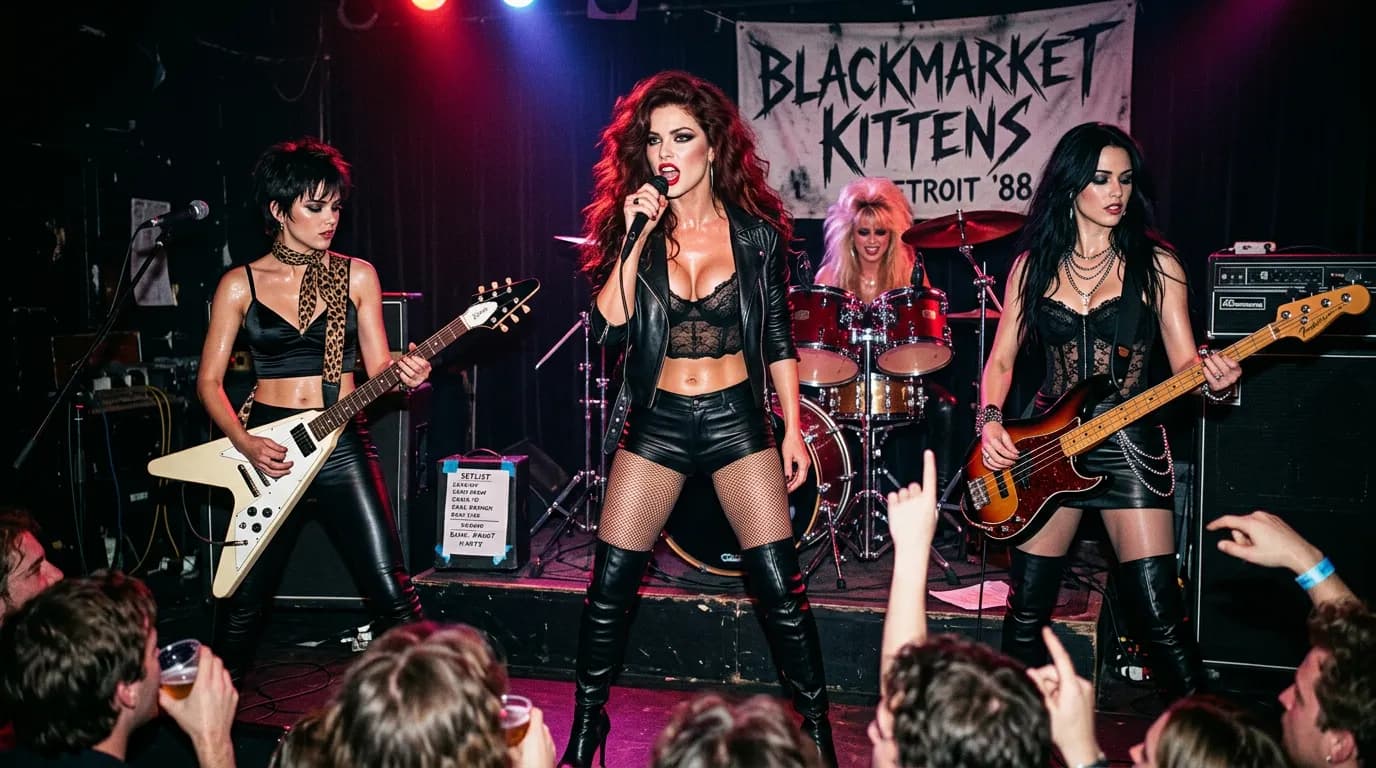
Detroit Underground Glamour · Backdoor Records
You didn't find us. We found you.
Detroit, Michigan · 1984–1992
FROM THE ARCHIVE — ORIGIN
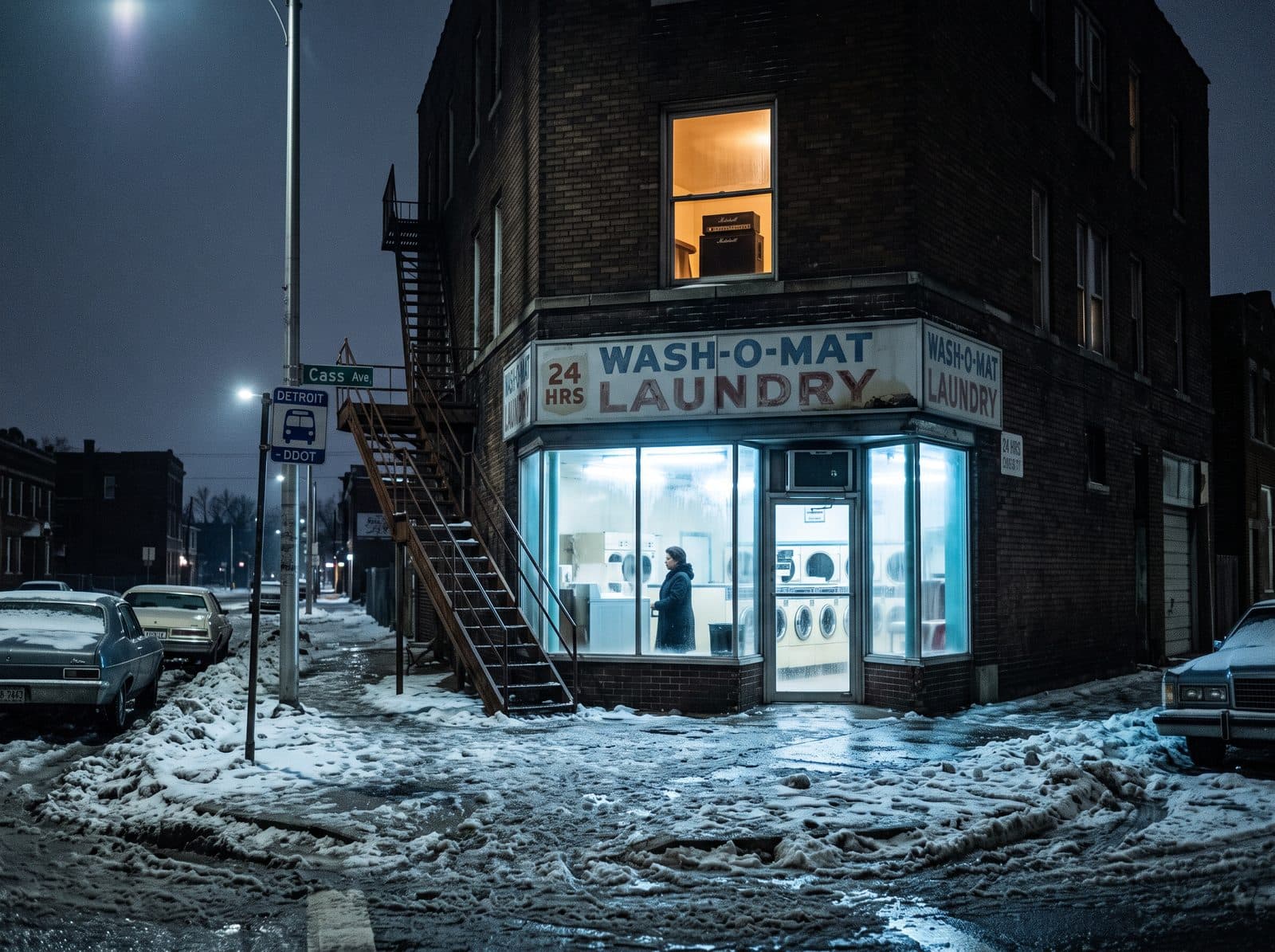
Blackmarket Kittens formed in Detroit in the spring of 1984 in an apartment above a laundromat on Cass Avenue. Roxanne Delacroix had been in two other bands, both of which ended when the male members decided she was a distraction. Dani Morel had been told by a guitar teacher at age sixteen that girls do not usually pursue lead guitar and had spent the next six years proving this was not a rule. Suki Park had been playing bass since she was thirteen and had never been in a band because nobody had asked. Carla Beaumont had been in four bands and left all of them because the drummers were worse than her and she did not see the point.
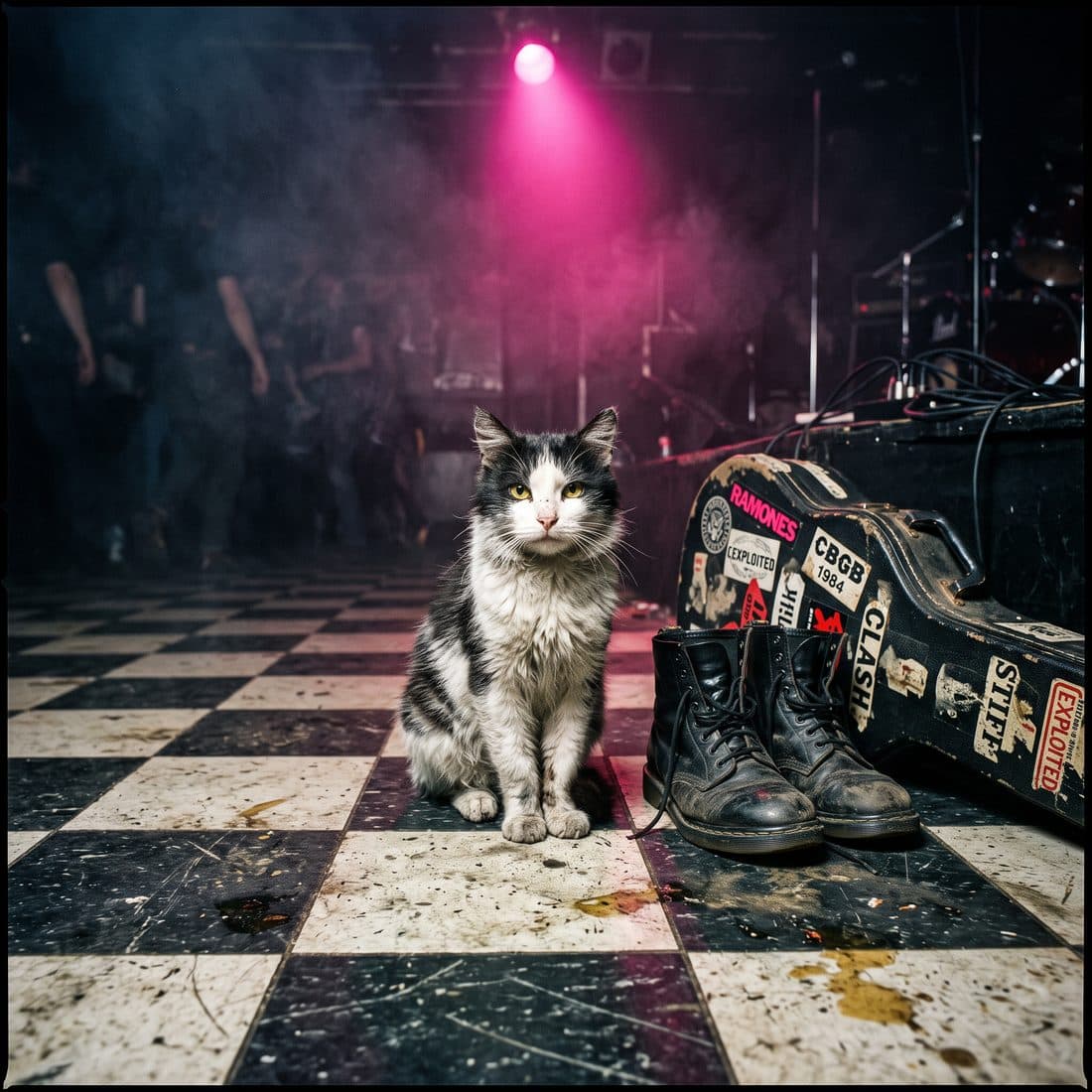
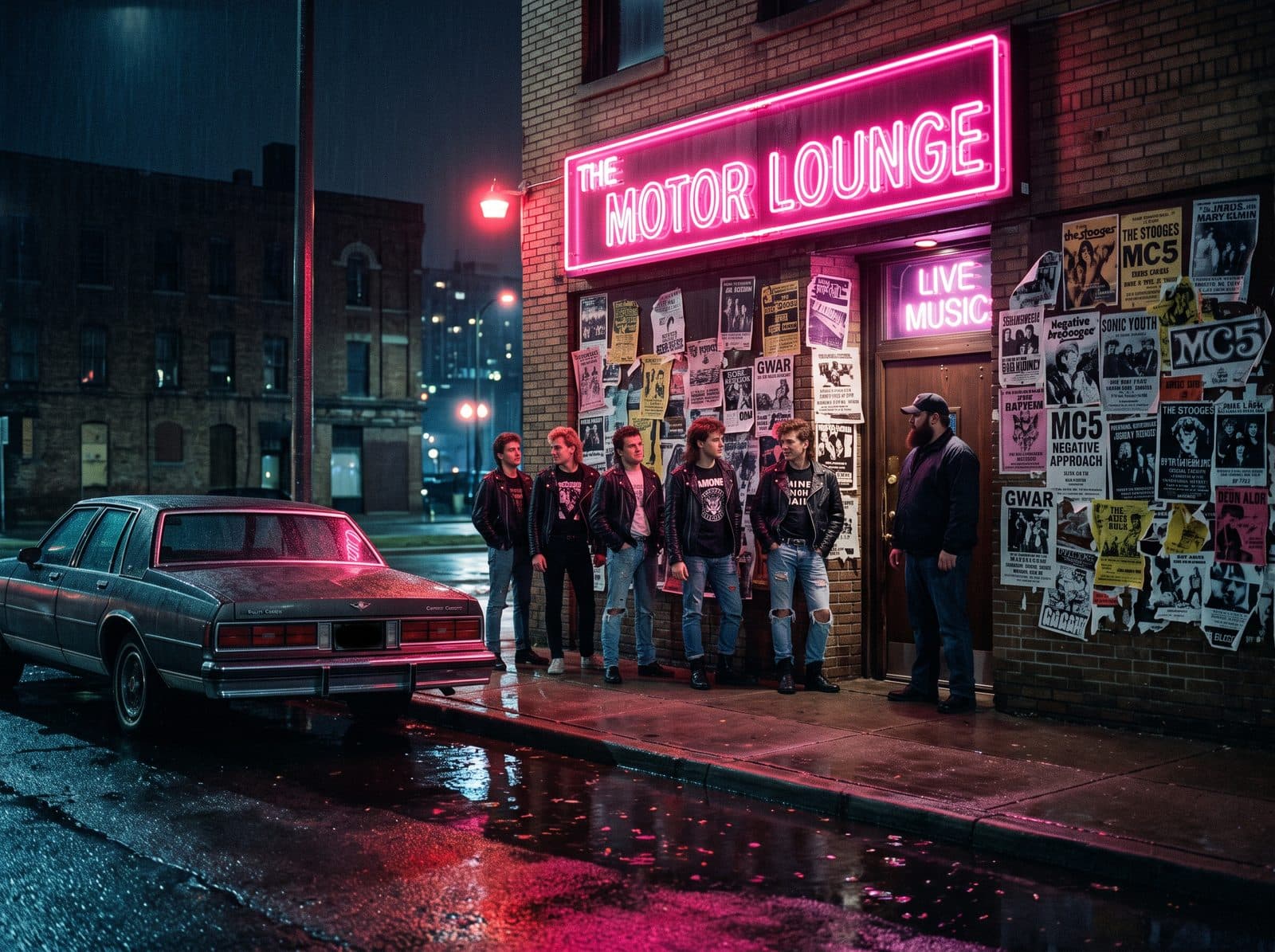
The four of them met at a show at a venue in Midtown that Roxanne had been denied a booking at. The venue owner, a man named Gerald, had told her the room was not right for what she was doing. Roxanne had asked what he meant. Gerald had said it was a vibe thing. A stray cat that had been living in the venue's back alley walked in through an open door during this conversation, crossed the room, and sat down next to Roxanne. Roxanne looked at Gerald. Gerald looked at the cat. Roxanne said she would be in touch. She left. The cat followed her for half a block and then went its own way.
She found the other three at the show she went to instead. She knew Dani by reputation. Suki she recognized from the neighborhood. Carla she had seen play with two different bands that night, because she had sat in with the opening act and then with the headliners when their drummer got sick, and in both cases she was noticeably better than everyone else onstage.
“Gerald said it was a vibe thing. The cat disagreed. We named the band after that.”Roxanne Delacroix, 1989 interview with Detroit Music Monthly
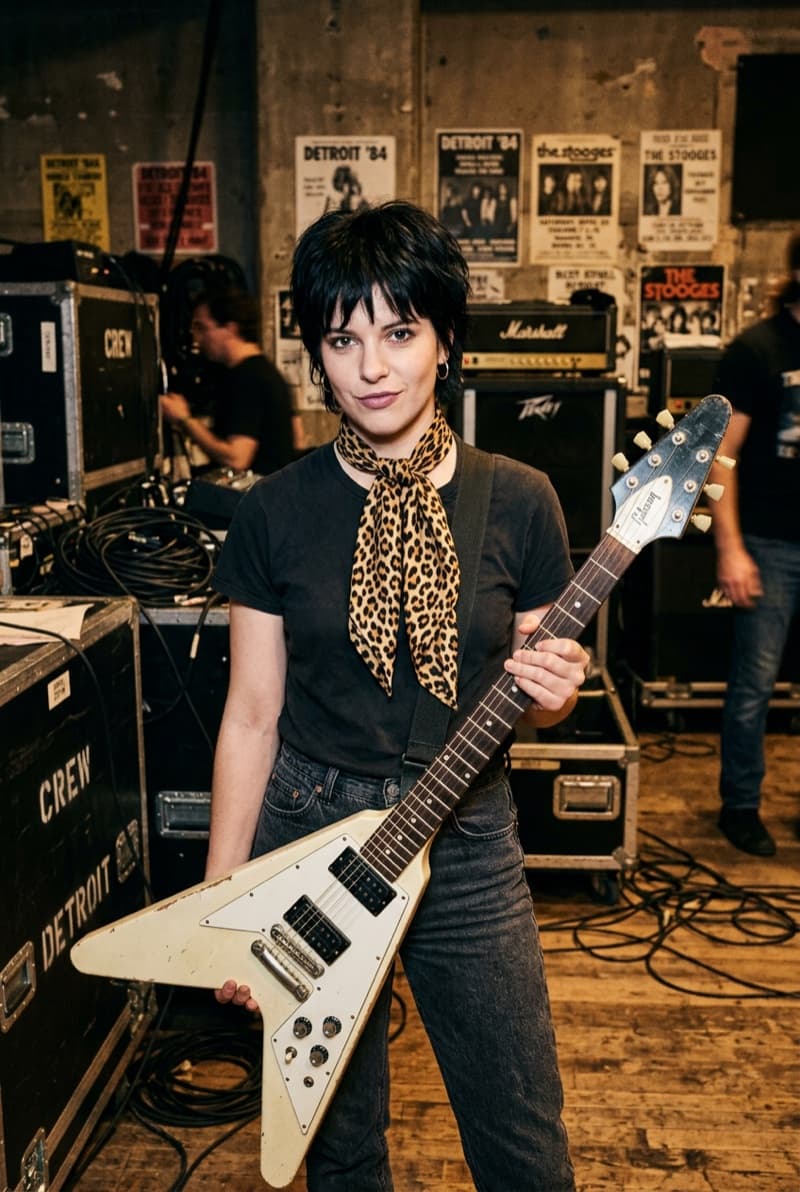
Lead Vocals
“Razor”
Gerald said it was a vibe thing. The cat disagreed.
Moved to New York in 1992. Has not explained why. Works in fashion. Still has the leather jacket.
Lead Guitar
“Dani”
The guitar parts are there if you listen past the production.
Studio session guitarist, Detroit and Chicago. Has played on fourteen albums you have heard. Is not credited on twelve of them. Is fine with this.
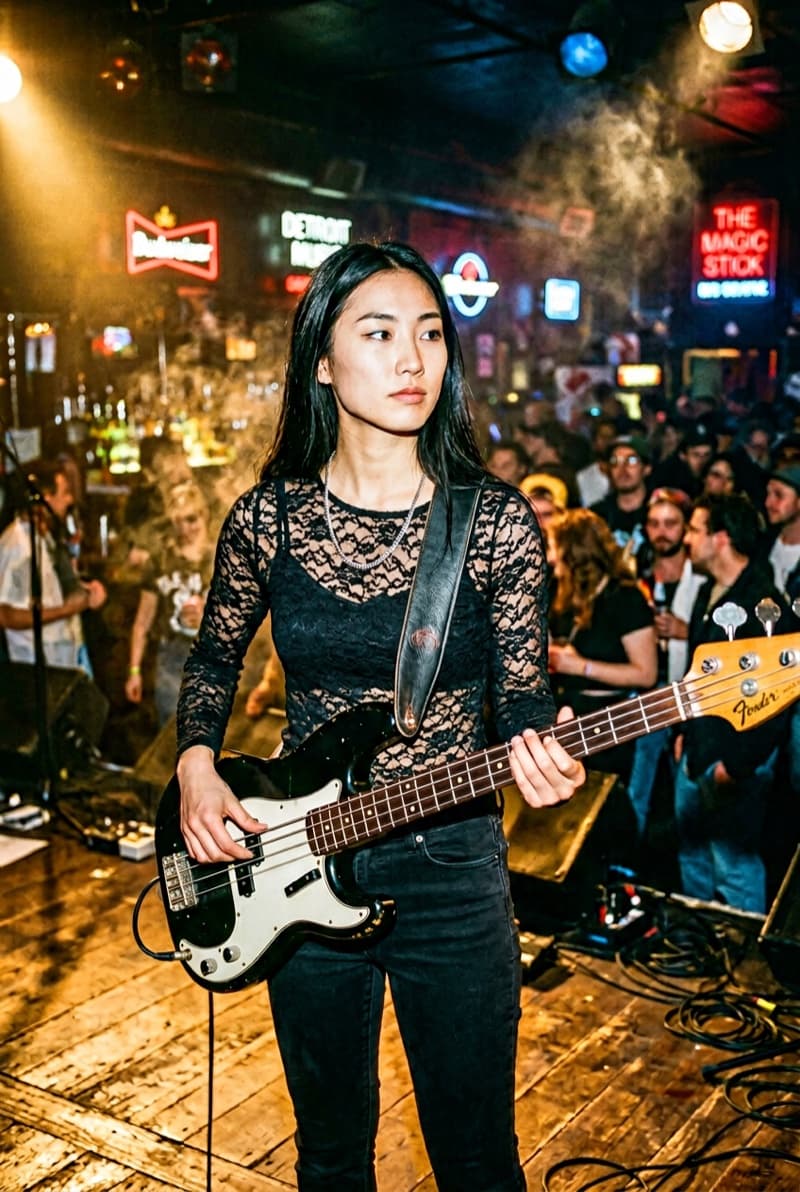
Bass
“Suki”
I said yes before she finished explaining what kind of band it was. I did not need to know.
Teaches music at a high school in Ann Arbor. Her students do not know about the band. She has not told them. She is waiting for the right moment. It has been thirty years.
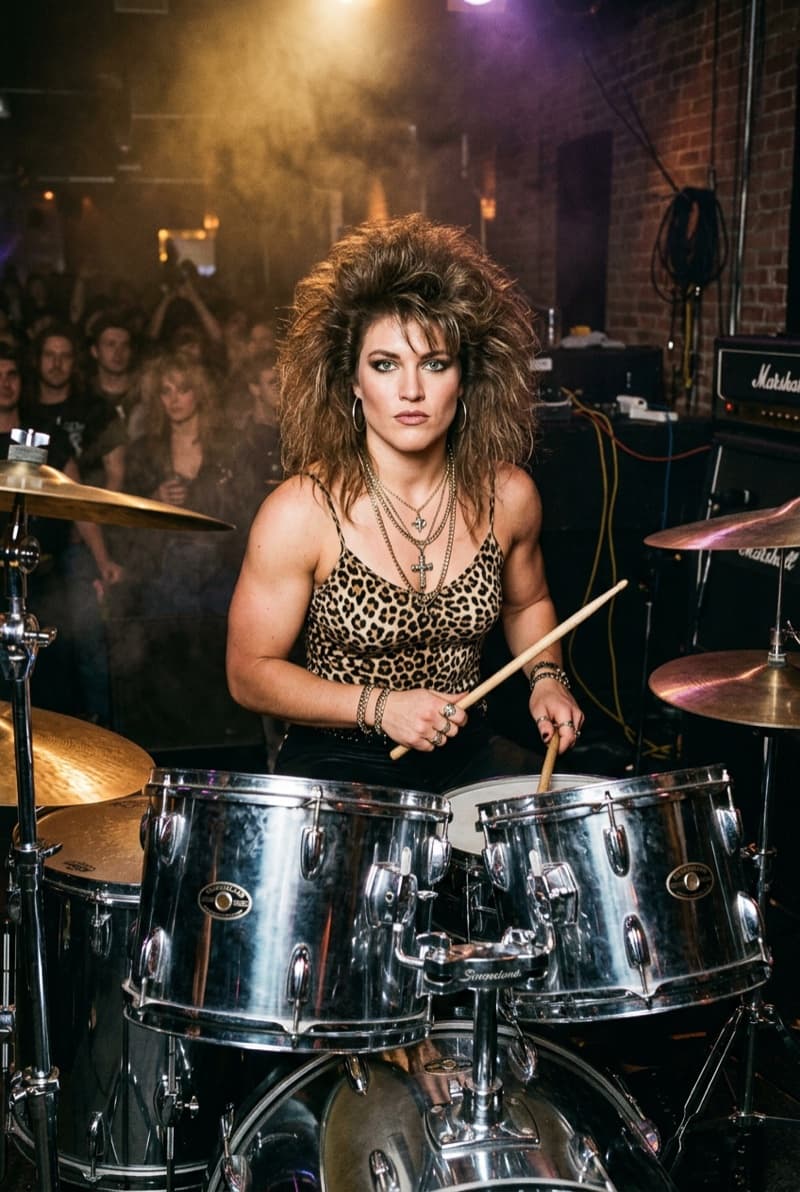
Drums
“C-4”
You cannot fake the tempo. I have found this to be true about most things.
Married a drummer from another band. Has three children. Coaches youth soccer. Still the most intimidating person in any room she enters.
ALSO ON THE GUEST LIST
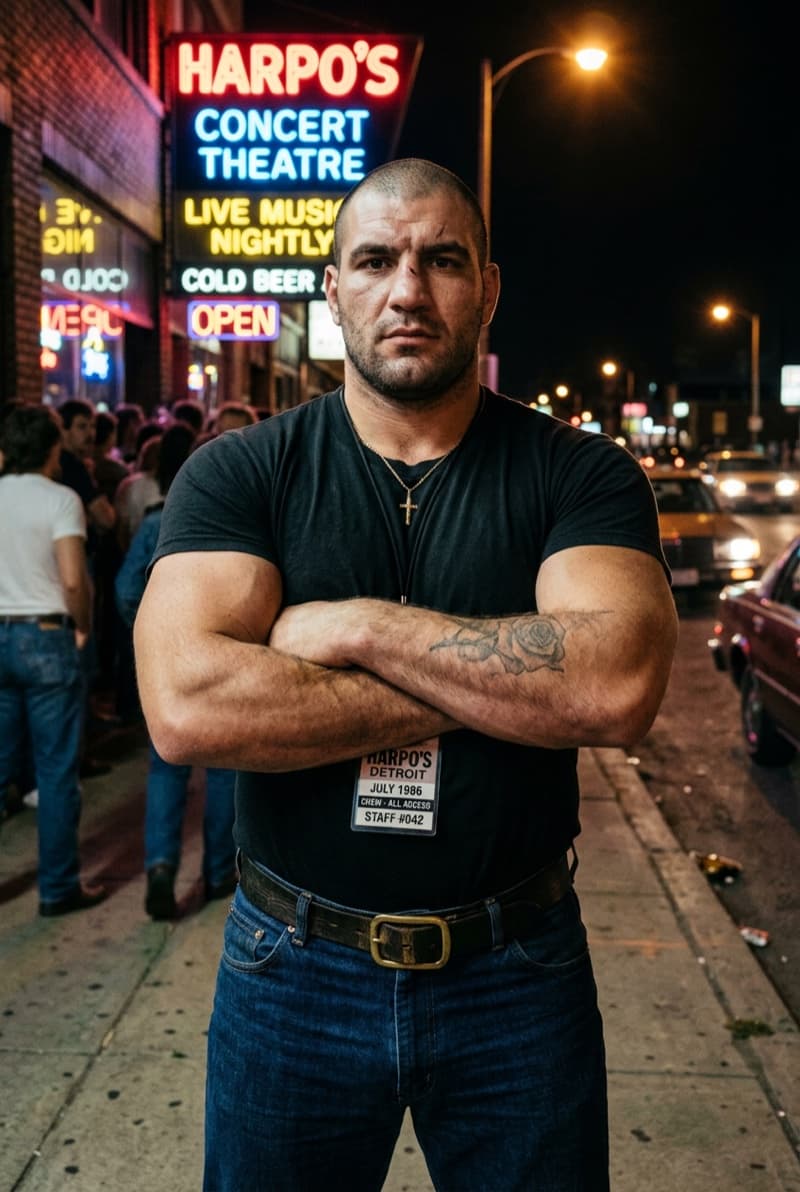
Roadie / Security
The songs are beautiful. I do not understand the question.
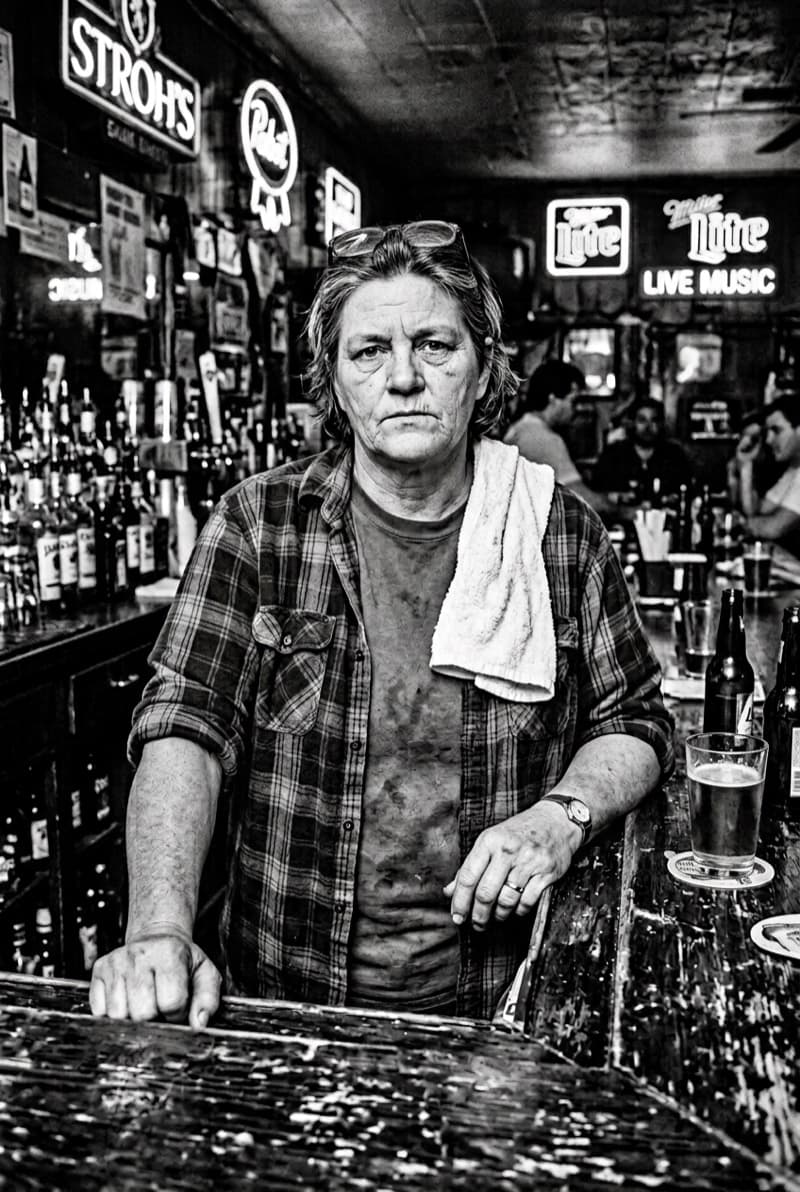
Venue Owner (The Motor Lounge, Detroit)
I gave them a Tuesday. Then I gave them another Tuesday. That is how it works.
Three recordings survive in listenable condition. The archive recommends volume.
Five songs recorded in the apartment above the laundromat and sold from a bag at shows. This is the tape Gerald handed back after ninety seconds.
5 tracks →Recorded in three days. 340 copies sold. The studio owner bought twelve.
8 tracks →The title track was written during a three-hour show that was supposed to be forty-five minutes. The production is thin. The songs are not.
9 tracks →Recorded November 1989. Forty-five minutes on the contract, three hours and seven minutes on the tape. Released two years later because nobody realised the desk had been rolling.
8 tracks →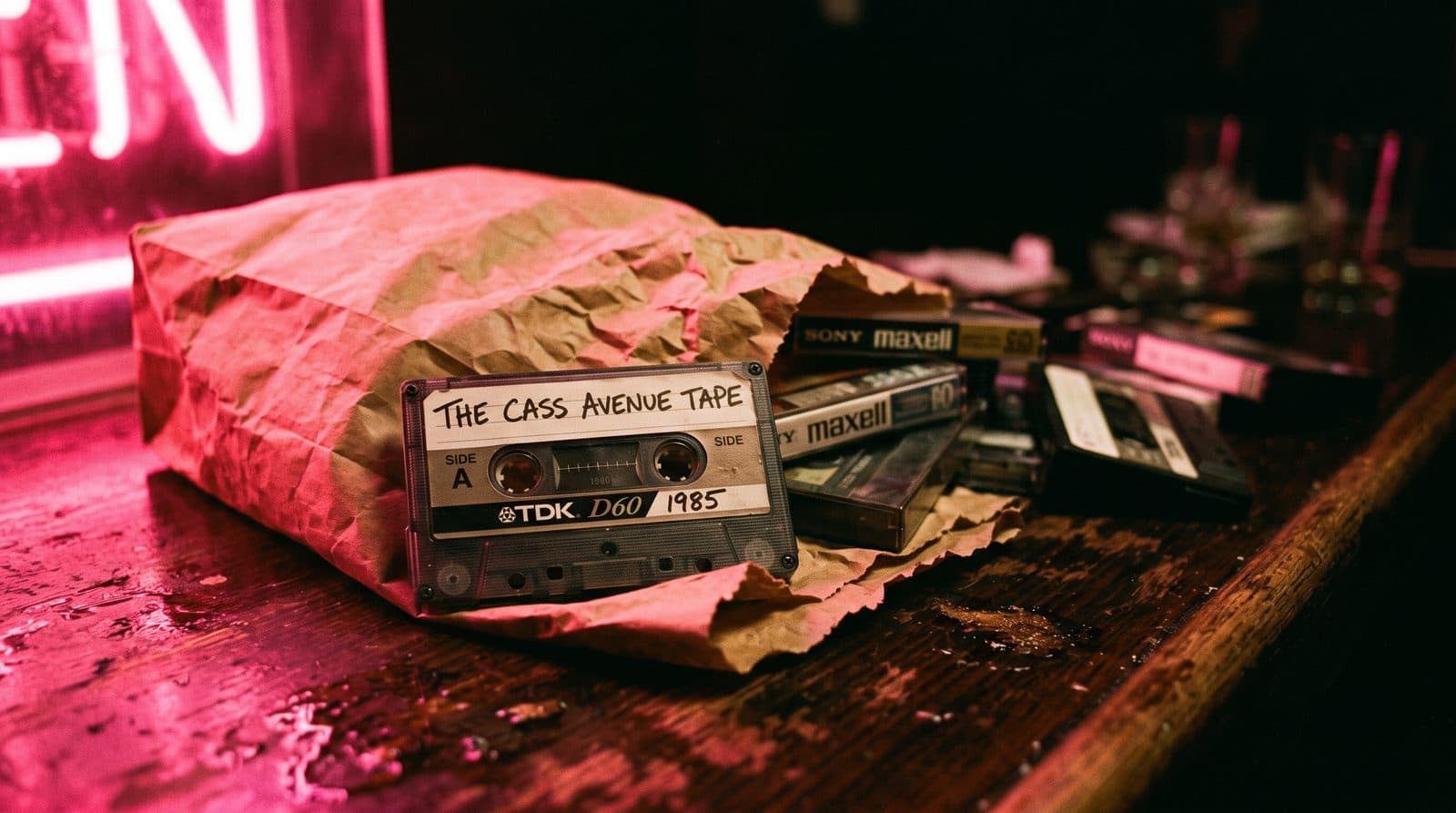
The archive keeps an incident file on every band. This one is thicker than most. None of it was their fault.
INCIDENT 01 · 1984
A venue in Midtown Detroit
Gerald said it was a vibe thing. A stray cat walked in and sat next to Roxanne. The band was named the following week.
Gerald ran a music venue in Midtown Detroit that booked local acts on weekends. Roxanne went to see him in person about a booking in the spring of 1984. She had a tape. She had a press sheet. She had played in two prior bands with documented history. Gerald listened to approximately ninety seconds of the tape, handed it back, and said the room was not right for what she was doing. Roxanne asked what he meant. Gerald said it was a vibe thing. He said this with the specific confidence of a person who has never had to explain what he means. A stray cat that had been living in the alley behind the venue walked in through an open side door at this point — the kind of cat that is comfortable everywhere, orange, substantial, moving with the authority of an animal that has decided where it lives. The cat crossed the room without acknowledging Gerald, walked to the spot where Roxanne was standing, and sat down. Roxanne looked at Gerald. Gerald looked at the cat. Gerald said he would be in touch. Roxanne said she appreciated his time and left. The cat followed her for approximately half a block, then turned down an alley and was not seen again. The band was named the following week.
INCIDENT 02 · 1988
A record label office, West Hollywood, California
Todd said "you girls" three times. The third time ended the meeting, the label deal, and apparently Todd's afternoon.
The label flew all four members to Los Angeles in January 1988. The hotel was in West Hollywood. The meetings were in a building that had more glass than seemed structurally necessary. The first meeting was with the label's president, who was direct and specific and said things Roxanne found credible. The second meeting was with the marketing team, who had ideas about the band's image that the band found manageable. The third meeting included Todd. Todd was the A&R director. Todd had strong opinions about what was working in the market and said them confidently and used the phrase "you girls" in the first three minutes. Roxanne noted this and continued the meeting. Todd said "you girls" a second time approximately eight minutes later. Roxanne said his name, clearly, and continued her sentence. Todd said "you girls" a third time twelve minutes into the meeting. Roxanne said it had been a pleasure meeting everyone, thanked the label, and stood up. Dani, Suki, and Carla stood up simultaneously without discussion, which Roxanne has cited as one of the things she is most proud of. They returned to the hotel. Suki ordered room service. The label called twice more. Roxanne did not return the calls. The band has never fully agreed on whether this was the right decision. Nobody has argued it was the wrong one.
INCIDENT 03 · 1989
A club in Detroit
A 45-minute set became three hours because nobody stopped them. One of the improvised songs became the title track of their second album.
On a Friday in November 1989, Blackmarket Kittens played a set that was supposed to be forty-five minutes and lasted three hours and seven minutes. This was not planned. The band played their set and nobody stopped them. The sound person assumed someone else was managing the time. The venue manager was in the office dealing with a plumbing issue. The audience, which had started at approximately 200 people, was at 280 by the end because people had come back in from the smoking area to see what was happening and then stayed. The band played their full set, then played four songs again because they were the best ones, then played three songs that were not finished songs — they were ideas that became songs on stage that night because there was time and the room was the right room. One of those songs became "Claws Out," the title track of the 1990 album. The plumbing issue was resolved. Nobody was charged extra. The sound person has described the evening as "the best accident I was ever involved in."
INCIDENT 04 · 1992
A club in Detroit, seventeen previous appearances
Roxanne announced the last show mid-set without telling the other members. They kept playing because the song was not finished.
The last show of Blackmarket Kittens was on a Saturday in March 1992. There were 280 people in the audience. They were seven songs into the set when Roxanne stopped playing, stood at the microphone, and said this was the last show of Blackmarket Kittens. She said it clearly and without preface. Then she counted in the next song and they finished the set. Dani, Suki, and Carla heard this announcement at the same time as the audience. None of them stopped playing. Carla has said she knew before the announcement — she felt it in the set list and in the specific way Roxanne was singing that night. Dani has said she had not known and was surprised and played through it because the song required it. Suki has said she was the last one offstage that night and stood there for longer than four seconds. Roxanne moved to New York six weeks later. Carla cried in the parking lot afterward. She has told one person this. She is not currently telling another one.
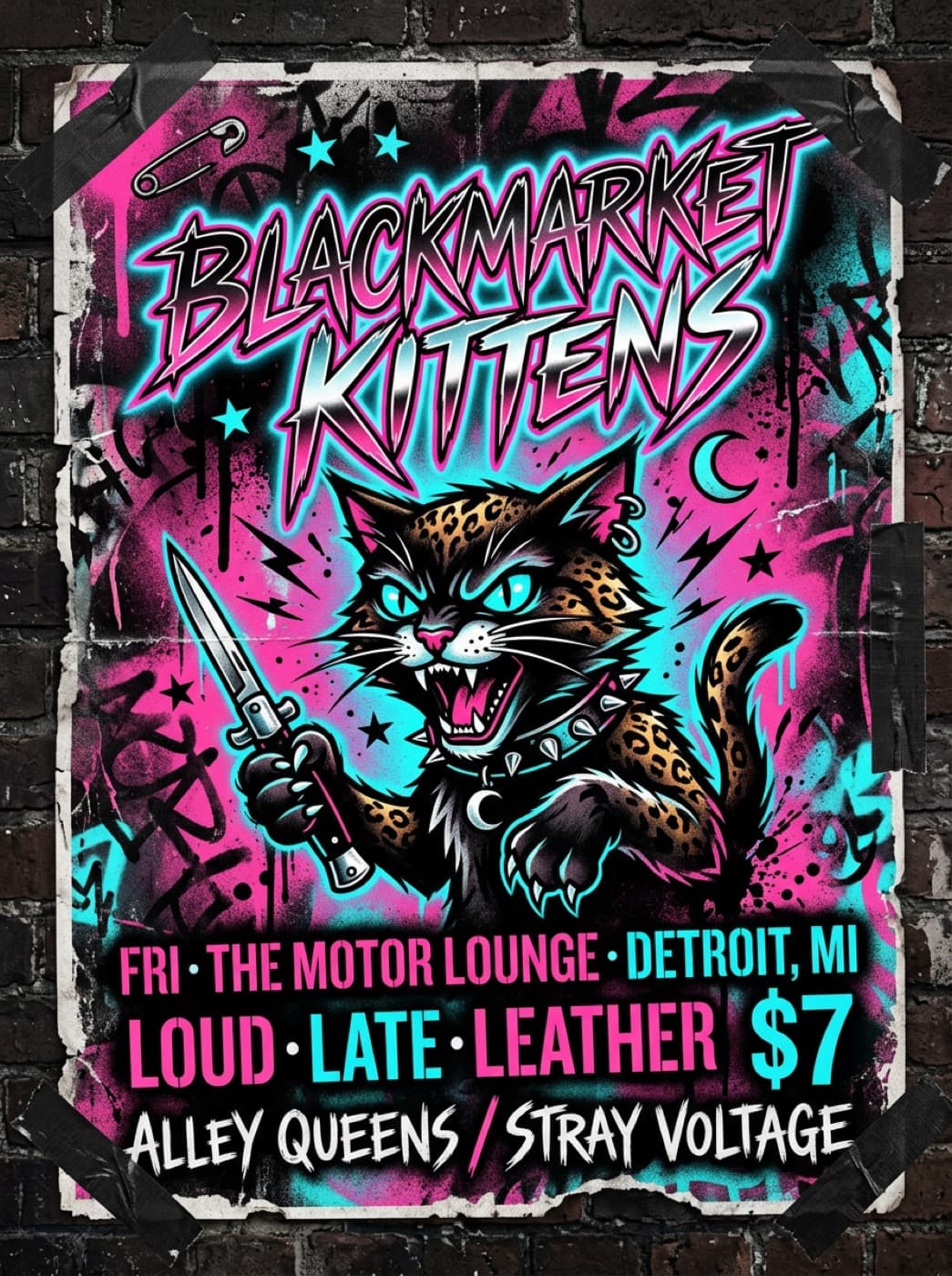
They did not tour. They circled. Eight cities, seven years, one sold-out night at the Majestic.
CHAPTER 1
Blackmarket Kittens spent their first two years playing every venue in Detroit that would book them and several that initially would not. They were not the first all-female rock band in Detroit and they said so when asked, specifically and correctly. They were, by any measurable standard, one of the best bands playing the circuit in 1985, which created a specific problem: they were better than most of the bands they opened for, and the headliners knew it.
They played 140 shows in two years. They had three dedicated fans who came to almost every one — a man named Phil who worked at a record pressing plant and brought his lunch, a woman named Carole who was Carla's aunt and came out of family obligation and stayed out of genuine appreciation, and a teenage boy named Marcus who would later become a music journalist in Chicago and write about them in 2003 in a piece that more people should have read.
In 1986 they recorded their first album in three days in a studio on the east side whose owner charged them half rate because, he said, they were the tightest band he'd recorded all year. The album was called "You Didn't Find Us." It sold 340 copies. The owner of the studio bought twelve of them.
CHAPTER 2
In 1987 a representative from a mid-sized Los Angeles record label saw Blackmarket Kittens play a Tuesday night show at a club in Midtown. He was in Detroit for unrelated reasons. He stayed for the full set. He gave Roxanne his card.
The label flew all four of them to Los Angeles in January 1988. They stayed in a hotel in West Hollywood for four days. They had three meetings. The first two went well. The third meeting included the label's A&R director, a man named Todd, who during the meeting referred to the band three times as "you girls." Roxanne let it go the first time. The second time she said his name, clearly, and continued her sentence. The third time she stood up, thanked the label for their time, and left. Dani, Suki, and Carla followed without discussing it. They went back to the hotel. Suki ordered room service. Nobody talked about it until they were at the airport the next morning, at which point Carla said "good call" and that was the end of the conversation.
The label called twice more over the following year. Roxanne did not return the calls. The band has never fully agreed on whether this was the right decision. It was Roxanne's call to make and she made it.
CHAPTER 3
Between 1989 and 1991, Blackmarket Kittens were as good as they were ever going to be, which was very good. Dani's guitar playing had developed into something that made other guitarists stop what they were doing to watch. Carla's drumming had always been technical but had acquired a ferocity that felt personal. Suki's bass was the kind of bass playing that you feel before you hear. Roxanne's voice had always been the instrument that organized everything else, and by 1990 she had complete command of it in a way that made rooms go quiet.
They released a second album in 1990 called "Claws Out." It sold 1,100 copies. Three music publications wrote about it. Two of them said the band deserved a bigger audience. One of them said the production was thin. The production was thin because they paid for it themselves and could not afford the studio time they needed. Dani has noted, in the years since, that the guitar parts are still there if you listen past the production. She is right.
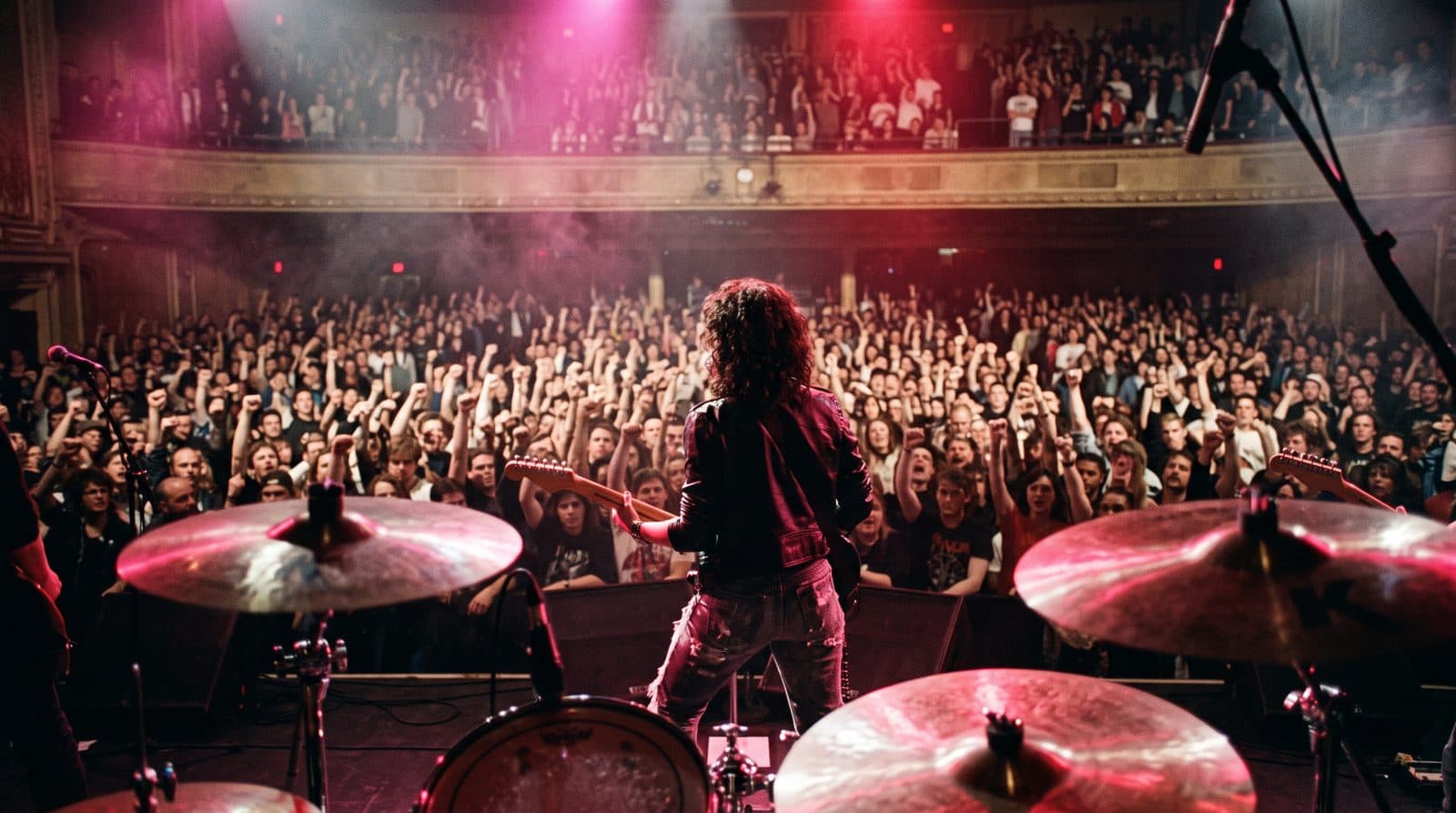
In 1991 they headlined their first significant show — a 400-person venue in Detroit that sold out three weeks in advance. Phil was there. Carole was there. Marcus was there with a notebook. Roxanne wore a leather jacket she had owned since 1982 and has not taken off a wall since.
CHAPTER 4
The last show of Blackmarket Kittens was on a Saturday in March 1992 at a club in Detroit they had played seventeen times before. There were 280 people in the room. Midway through the seventh song, Roxanne stopped playing, leaned into the microphone, and said this was the last show. She said it the way you say something you have thought about carefully and decided. Then she started the song again from the top and they finished the set.
Dani, Suki, and Carla learned it was the last show at the same moment as the audience. None of them stopped playing. This is, depending on who you ask, either a testament to their professionalism or evidence that they saw it coming or both.
Roxanne moved to New York six weeks later. She has said, in the years since, that the band had gone as far as it could go in the space it occupied and she needed more space. She has not elaborated on what this means. The other three have stopped asking.
Detroit Music Monthly · Summer 1989
The underground's most watchable band on record deals, Gerald, and the cat
“They are describing a different band.”
We meet Roxanne Delacroix at a coffee shop on Cass Avenue, three blocks from the laundromat above which Blackmarket Kittens first rehearsed in 1984. She is drinking black coffee. She arrived before us.
DMM: Five years in. How do you feel about where the band is?
ROXANNE: We are exactly where we chose to be.
DMM: Some people would say you should be further along.
ROXANNE: Some people would. They are describing a different band.
DMM: The LA trip — the record deal that didn't happen —
ROXANNE: The meeting that concluded. Yes.
DMM: Can you talk about why?
ROXANNE: The A&R director used a phrase three times that indicated he saw us in a way that was not accurate. The third time made the meeting unnecessary.
DMM: "You girls."
ROXANNE: That's the phrase.
DMM: Do you regret it?
ROXANNE: I regret that it was a choice I had to make. I don't regret making it.
DMM: Dani's guitar playing has become something people talk about.
ROXANNE: It has always been something people should have talked about.
DMM: What's next?
ROXANNE: Another album. Another year of shows. The same things we do.
She finishes her coffee. She thanks us for coming. She means it. She leaves first.
Detroit Free Press · November 1991
400 people, one leather jacket, zero opening acts
“The guitarist is the reason you should be listening past the vocals.”
Blackmarket Kittens sold out the Majestic Theatre on Friday night for the first time in their seven-year history, which raises the question of why it took seven years.
The short answer is that Blackmarket Kittens have never particularly wanted to be somewhere other than where they are, which is a quality that is both admirable and, from a career management standpoint, limiting. The longer answer involves a record deal they walked away from, an underground circuit they have worked with complete dedication, and four musicians who play together with the specific ease of people who have been doing this long enough to stop thinking about it.
The vocalist, Roxanne Delacroix, has a voice that this reviewer will note without hyperbole is the best currently operating in the Detroit rock circuit. She wears a black leather jacket that she appears to have owned since before the band existed, and she performs in it with the comfort of someone who has never considered removing it.
The guitarist, Danielle Morel, is the reason you should be listening past the vocals. The guitar work is architectural — not flashy, not showing off, but load-bearing in a way that you notice when you imagine the songs without it.
The rhythm section is the floor. Suki Park's bass is felt before it is heard. Carla Beaumont's drumming is the most physical thing on the stage and she is the most still person up there.
They played for ninety minutes. The crowd wanted more. The band played one more song. Then they left.
I saw them fourteen times. I have no regrets about any of them. I have one regret, which is that there were only fourteen times.
— Phil W., Detroit, MI
The three-hour show in 1989 is the best concert I have ever attended. I arrived planning to leave at 9. I left at midnight. I would do it again.
— C. Morel, Hamtramck, MI
Dani Morel is the best guitarist I have seen in thirty years of attending shows. I wrote about something else. I think about this regularly.
— Marcus W., Chicago, IL
The bass on "Claws Out" changed how I listen to bass. I did not know it had changed how I listen to bass until three years later when I heard a bass player who was not Suki Park and noticed the difference.
— Anonymous, Ann Arbor, MI
I was at the last show. I did not know it was the last show until she said so. I stayed for the rest of the set. So did everyone.
— R. Beaumont, Detroit, MI
The Blackmarket Kittens fan club meets wherever the archive says it does. Sign up through the Sideband Label list and you will hear about new recordings, merch drops, and anything else that turns up in the incident file.
Get on the listWe don't share the list. Gerald asked once. The answer was no.
Detroit, Michigan. 1984–1992. Not your fault you missed it.